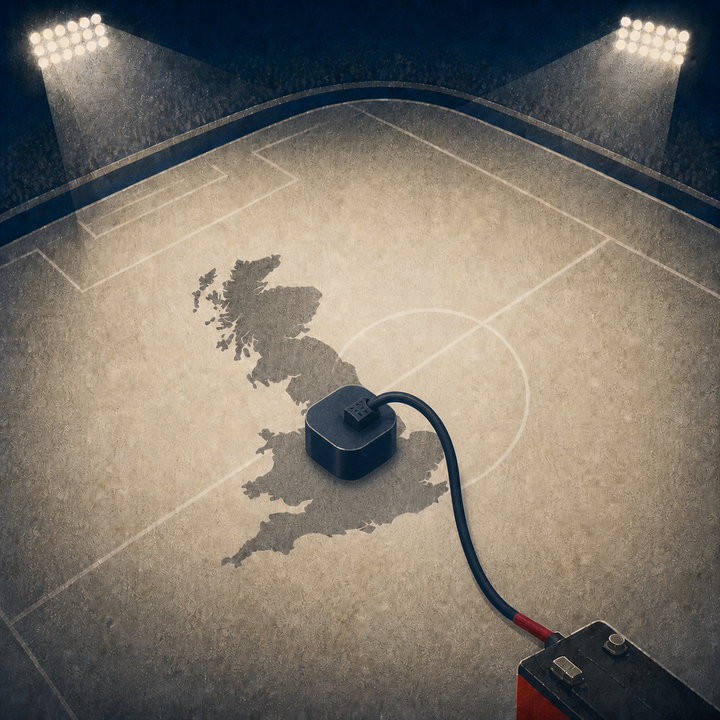

The continent is rearming with impressive speed. The trouble is that its enemies are aiming somewhere else.
Europe is buying steel as if history were fought only by tanks, shells and splendid procurement announcements. Yet decline in great powers seldom arrives in parade uniform. It creeps in through the seams: in cables on the seabed, in signals in the sky, in logistics nobody notices until they fail.
SIPRI says European states increased their arms imports by 210% between 2016–20 and 2021–25. Among the 29 current European NATO members, the rise was 143%, and the United States supplied 58% of those imports. That is a striking number, but also an awkward one. It suggests that Europe’s visible military surge is still, in important measure, someone else’s industrial triumph.
The spending boom is real enough. The European Commission’s SAFE instrument offers up to €150bn in long-maturity loans for defence investment, while the broader ReArm Europe/Readiness 2030 plan aims to unlock more than €800bn. The EU’s defence-industrial strategy is, at least on paper, admirably specific: procure at least 40% of defence equipment collaboratively by 2030; raise intra-EU defence trade to at least 35% of the value of the EU defence market by 2030; and move towards buying 50% of defence procurement within the EU by 2030, and 60% by 2035. NATO, for its part, says European allies and Canada increased defence spending by 20% in 2025 compared with 2024. Europe is not asleep. It is spending, legislating and exhorting.
And yet, on the real board, Europe still looks behind. Because the contest is about more than spending. It is about whether it can turn rearmament into strategic autonomy and infrastructure resilience before Russia keeps proving that Europe’s critical systems remain exposed. Moscow’s method is brutally efficient. Rather than matching Europe euro for euro in visible procurement, it can exert pressure through hybrid disruption: signals, navigation, undersea infrastructure, deniable nuisance with strategic effect. In January Finland and 13 other European countries warned the international maritime community that GNSS interference had increased safety and security risks in the Baltic and North Seas. NATO launched Baltic Sentry after damage to energy and communication cables, promising more ships, aircraft, drones and integrated surveillance to protect critical undersea infrastructure.
Russia is testing Europe’s power. Because states do not simply rise and fall in a neat line from prosperity to collapse. They pass through stages: build, momentum, contenders, zenith, pressures, overreach and decline. The danger point comes not when a power is visibly weak, but when it cannot convert large resources into integrated control faster than challengers can exploit its blind spots. The seven smart rules follow from that logic: first get a plan; then get a leader, mandate and elite alignment; deploy the relevant powers; deploy the policies that fit them; lead the new revolutions; blunt or break the rival’s pressure; and finally change fast enough to buck the cycle.
On that seven-rule test, Europe’s diagnosis is uncomfortable. Rule 1 is not the problem: Europe has a plan, and “strategic autonomy” is no longer a fringe slogan. Rule 2 is shakier: the Commission can set targets, create financing and deliver rhetoric, but procurement sovereignty still lives in 27 capitals. Rule 3 is clearer: the relevant powers here are military power, state power and infrastructure resilience. Rule 4 shows partial progress: SAFE, EDIS and EDIP are real policies, but they still look better at financing procurement than at integrating procurement, production, seabed protection and electronic-warfare resilience into one fast package. Rule 5 is where the tension becomes obvious: Europe is participating in the spending revolution, but not yet leading the autonomy revolution. Rule 6 is worse: Russia is still shaping the tempo through cheaper hybrid pressure. Which brings Europe, somewhat prematurely, to Rule 7—the question of whether it can still change in time.
History, alas, is unkind to systems that confuse scale with coherence. Charles V ruled an immense Habsburg inheritance and possessed resources that lesser princes could only envy. Yet the problem of that system was fragmentation not lack of material. Universal ambition outran practical coordination; peripheral pressure and dispersed commitments kept exposing the gap between nominal might and integrated control. Europe today is far freer, richer and more institutionalised than that old Habsburg patchwork. But the rhyme remains: a sprawling coalition can look formidable in aggregate and still function piecemeal under pressure. When the centre cannot compel delivery, the frontier becomes the test.
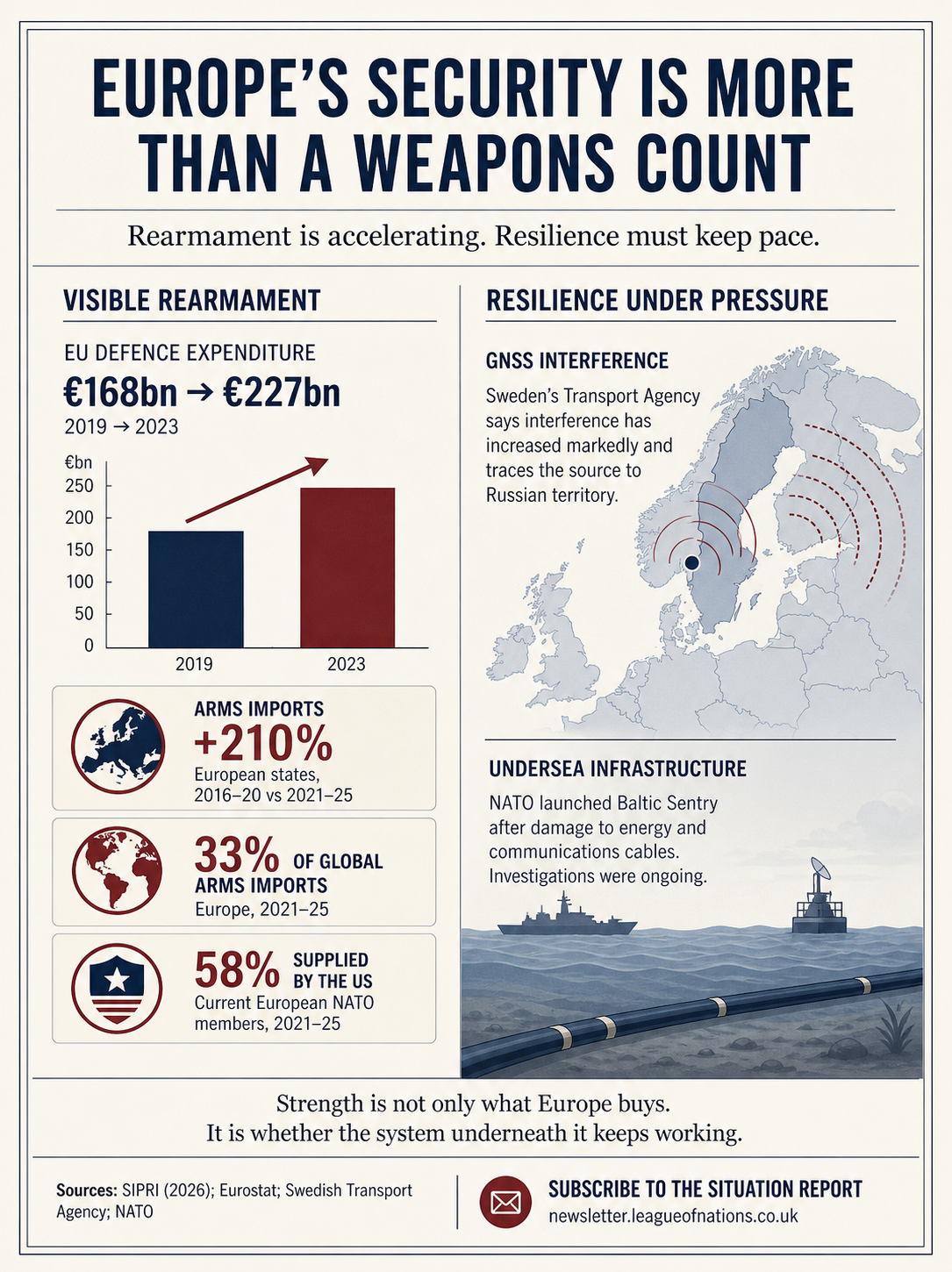
That matters because the consequences are profound. If interference and infrastructure pressure continue, the first sensation for ordinary Europeans will not be geopolitical drama but creeping unreliability. Navigation grows less secure. Repairs to damaged links cost money. Energy and communications systems require more redundancy. Insurance and contingency planning become dearer. Governments end up paying twice: once for visible rearmament, and again for fixing the hidden connective tissue that makes deterrence credible. The perverse result is a region that looks more armed on paper but feels less dependable in daily life.
The sensible response is not glamorous, which is precisely why it is probably right.
- Europe should build a joint Baltic seabed-and-spectrum resilience command linking cable surveillance, GNSS interference monitoring, maritime forensics and rapid repair.
- It should tie EU defence finance more tightly to intra-European production, dual-use hardening and common procurement with resilience conditions, so that spending produces autonomy rather than just reassurance.
- And it should publish an annual “Spend vs Defend” dashboard linking hardware purchases to resilience outcomes and hybrid incidents, so prestige cannot masquerade as performance.
The point of all three measures is the same: to force Europe to measure strength not by what it buys, but by whether an adversary can still disrupt the system underneath it.
So can Europe buck the cycle? Not yet. At best, it is laying the foundations for a delay. The plan exists. The policies are emerging. But performance still lags, because the rival’s measurable path of disruption is moving faster than Europe’s promise of autonomy. If the continent keeps buying visible power faster than it secures the signals, supply chains and seabeds that visible power depends on, it will confirm one of history’s oldest and cruellest lessons: great powers rarely decline because they spend too little. More often, they decline because they spend magnificently on the wrong proof of strength.
The Power Brief gives you the match. The Situation Report gives you the season — the full table, the future trend, and the leaders who found a way back.
Inside the SitRep:
- Weekly wrap-ups that dig deeper then the Power Brief's
- the 2030 forecasts
- the leaders who used Smart Power to escape the same trap
- and more!
If you want to stop guessing and start seeing where Britain is actually heading, this is the guide that does it.