Understand Power. Predict the Future. Win the Era.
Hello. Welcome to the League of Nations.
You know how you'd manage your football team better than the current manager?
You’d know the players, the tactics, the form. You’d spot when your team is rising up the table—or heading for relegation.
But here’s what’s kept me awake...
I learned in politics that our leaders know their football teams' form better than the country they direct. Where it's come from or where it's going. Jacob Burckhardt said statecraft was a work of art. Our leaders are colour-blind.
Here is the way to see.
Here is your full report on who's winning and who's losing in the Premier League of Nations right now and why.
See how they've performed since 1991 here in your interactive League of Nations dashboard.
But what's behind it all?
Smart Power is the theory. The League of Nations, the practice. Both are built on three pillars:
- Smart Powers: your position in the 7 leagues: economic, military, state, people, energy, culture, diplomatic
- Smart Rules: your plan, your leader, your powers, your policies, your revolutions, your rivals, your future
- Smart Cycles: your place in history: rise, momentum, challenger, zenith, pressures, overreach or decline?
How Smart Power Theory Becomes a Live, Playable, Forecastable World
The League of Nations is a new kind of geopolitical engine: part football league, part forecasting lab, part grand-strategy simulator. It stands on the shoulders of Smart Power Theory, built by Professors Joseph Nye, Samuel Huntington and Philip Bobbitt. Each explains one layer of how nations behave; the League of Nations turns that theory into the game of thrones anyone can play.
Each stage follows your League of Nations rise...
Joseph Nye provides the first layer: Smart Power—“Live History”. This is you now. You're a fan. You get your free Powerbrief
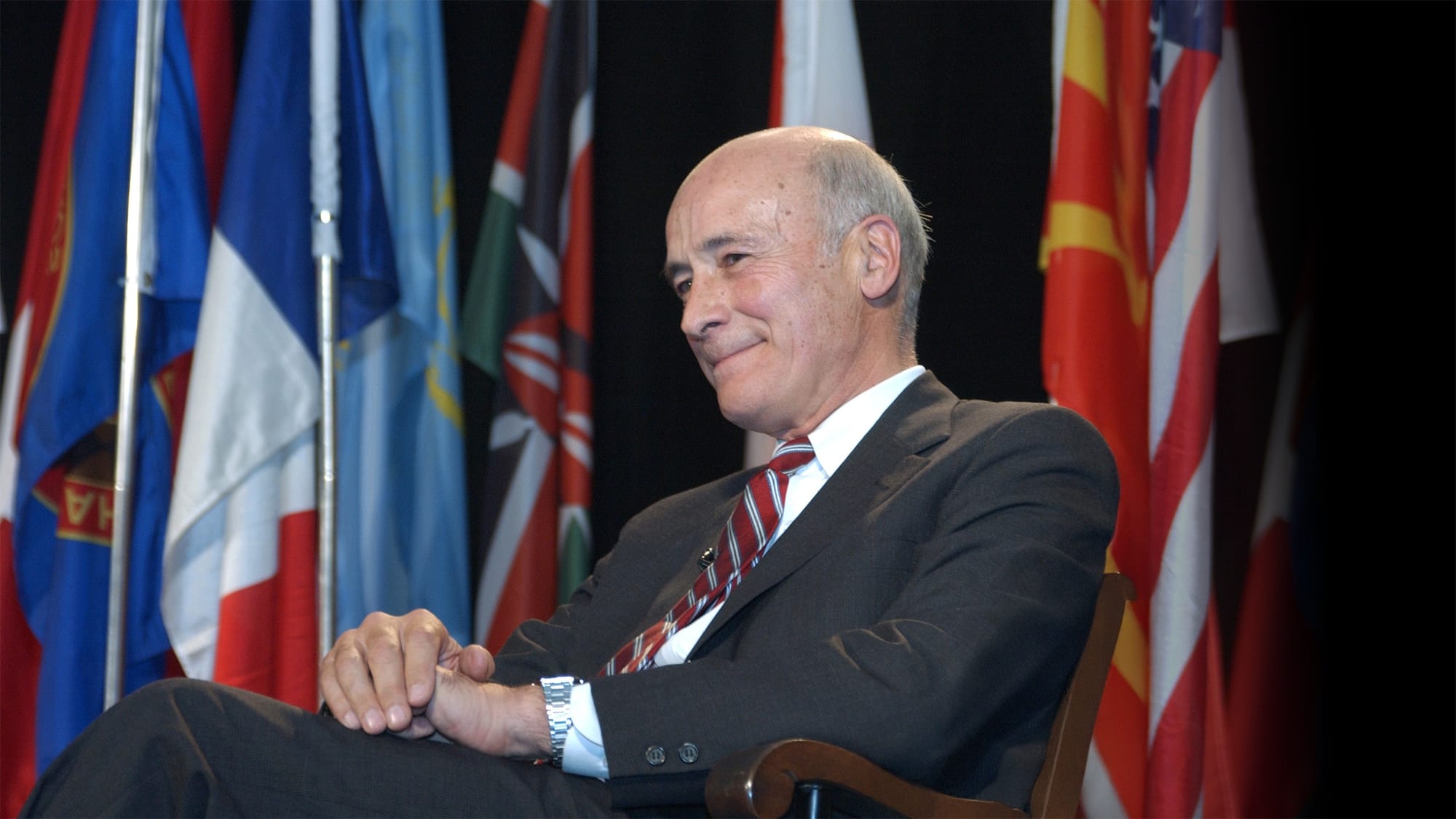
This is the match in real time: who presses, who dominates possession, who tires, who breaks the line. Nye teaches that power is not merely coercion but the mix of hard strength, soft appeal and strategic judgement—the blended formation modern states must master. In the League of Nations, this becomes Live History, where fans watch the weekly game-set-match results across 7 leagues, 1000’s of game metrics. Nye explains what power looks like on the pitch; the League shows who is winning.
Samuel Huntington provides the second layer: Smart Rules—“Make History”. You're a player. You get your Situation Report
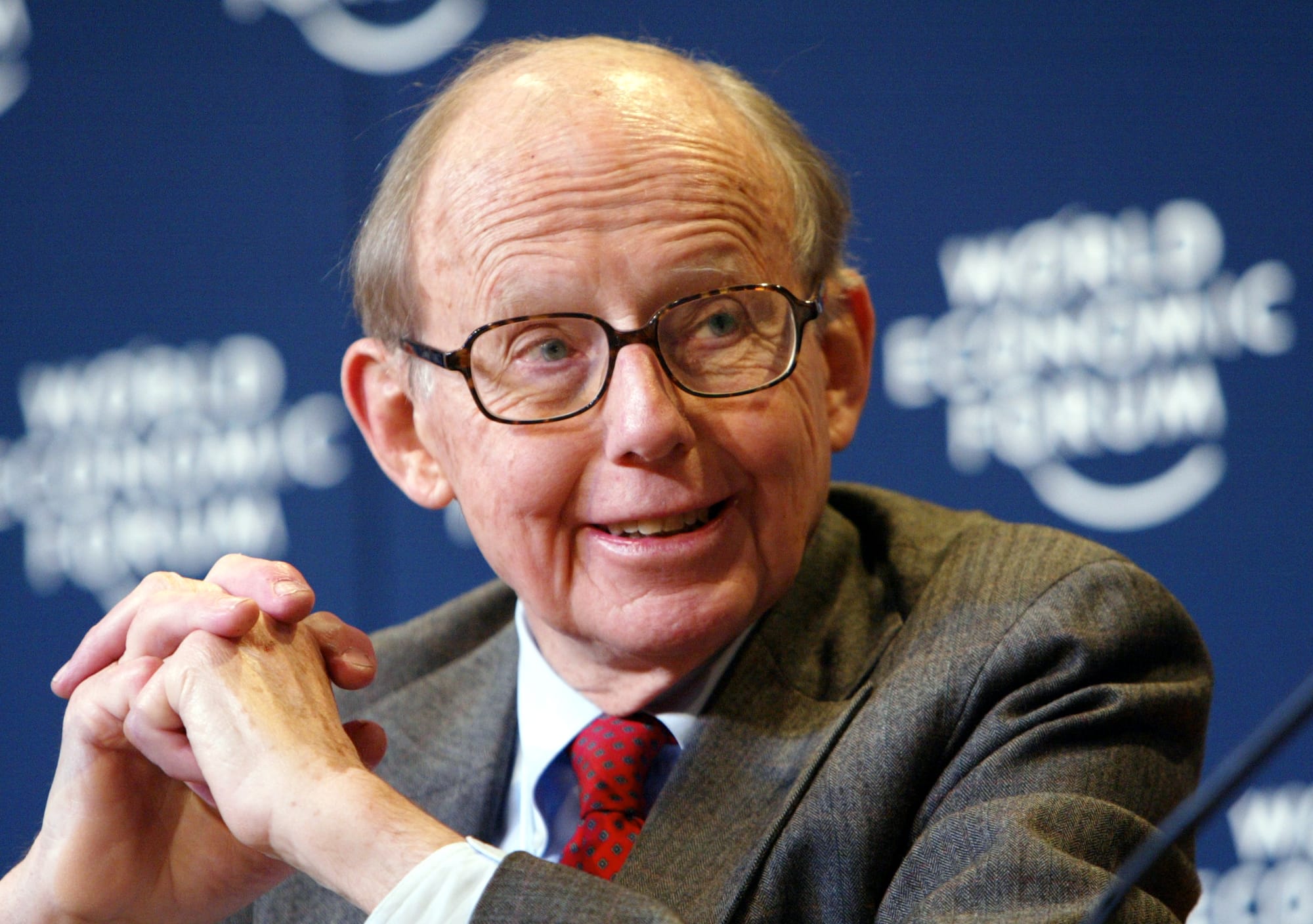
If Nye shows the match, Huntington supplies the manager’s philosophy. Civilisations carry deep cultures: they choose certain leaders, demand particular strategies, and impose distinct mandates on their elites. These become the Seven Smart Rules of Power, the unwritten code that determines how a state interprets the world and how it uses its seven powers:
- What’s your plan? (the grand strategy)
- Who leads? (the leader, the mandate and the elite in place to execute the grand strategy)
- What’s your strength? (the economic, military, state, people, energy, cultural and diplomatic powers you use to achieve the grand strategy)
- What are your policies? (the power game metrics you play to pursue the grand strategy)
- Are you cutting-edge? (the power revolutions you need to lead to boost your powers and policies)
- Who are your rivals? (internal and external threats to your grand strategy)
- Can you buck the cycle? (countries, like teams, are young or tiring. Are you rising or falling?)
In the League of Nations, these become Smart Rules, the zone where you move from spectator to player: forecasting the future, re-running the past, and testing different civilisational playbooks. Here Machiavelli enters the tunnel and whispers: “You can do better. Show me your plan.”
Philip Bobbitt provides the third layer: Smart Cycles—“Change History”. You're a manager. You go deeper still into smart power with your Influence Report
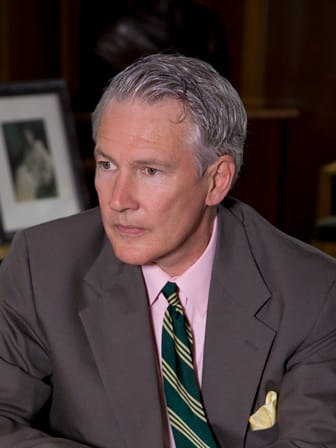
But smart power and smart rules are nothing unless you know where you are in history. Your stage in the cycle.
Professor Philip Bobbitt studies the league tables across centuries. States rise and fall through seven predictable stages—Rise, Momentum, Challenger, Zenith, Pressures, Overreach, Decline—as constitutional orders shift from princely to kingly, constitutional, empire, nation and civilisation states. In the League of Nations, this becomes Change History, the managerial level where you confront the fundamental question: Given your place in the cycle, what must you do to rise rather than fall?
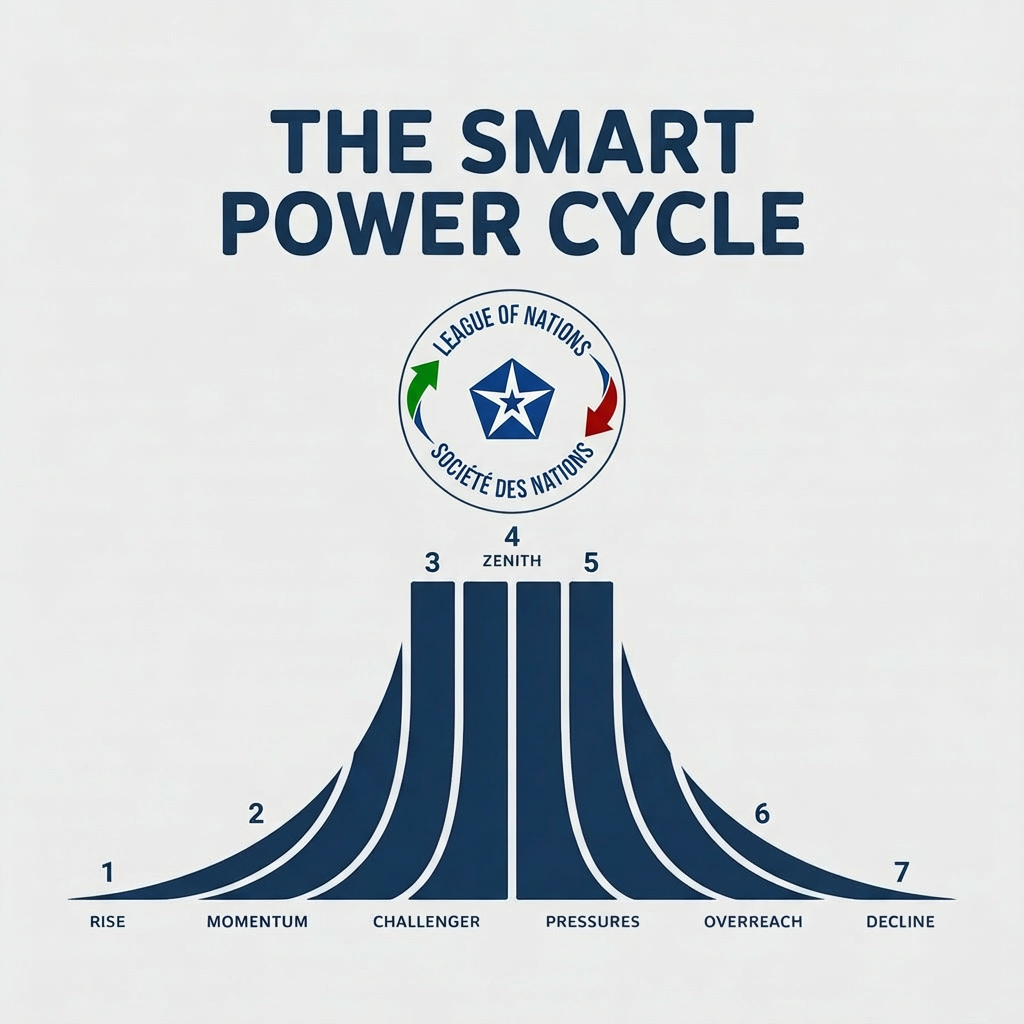
History moves in century-long cycles from rise to decline. Bobbitt identified five world wars that have sliced the last 500 years into distinct power epochs—each dominated by a different superpower: Spain, France, Britain, America, and now China.
Every century, an ambitious rising state challenges the hegemon in a transformative conflict that kills millions and reshapes how nations are governed. These world wars end with treaties that establish new world orders: Augsburg (1555), Westphalia (1648), Paris (1763), Vienna (1815), Versailles (1919) and Paris (1990).
Every century, these five world wars – driven by an ambitious leader of a rising state pursuing its strategic plan – all changed the way other states were run and people lived. Eras ended; millions died.
Here they are:
- Italian Wars (1526-1530): Established Habsburg hegemony over the Pope. Created the universalist Princely State order
- Thirty Years' War (1618-1648): Destroyed Spanish hegemony, enabled French rise. Created the absolutist Kingly State order
- Seven Years' War (1756-1763): Transferred hegemony from France to Britain. Created the secular Constitutional State order
- Napoleonic Wars (1792-1815): Confirmed British hegemony in which a French final bid for power was destroyed. Created the colonial Empire State order
- Long War: Axis War & Cold War (1939-1989): Established American hegemony. Destroyed first the German and then the Soviet bids for power...and the empire state. Created the democratic Nation State order
Between world wars come test wars—conflicts that challenge but don't overthrow the hegemon. The last test war was the Great War (1914-1918). Control over the Empire State order was fought out between liberal and autocratic orders. Based on historical patterns, the next test war is due by 2030. We are 87% through the danger zone.
Here they are:
- Italian Wars (1551-1559): The French tested Spanish hegemony, confirmed dominance till the 30 Years War destroyed it
- War of Spanish Succession (1701-1714): The Anglo-Dutch tested French hegemony until the 7 Years War destroyed it.
- Revolutionary Wars (1774-1797): The American and French revolutionaries flipped Britain from a constitutional to an empire state
- Great War (1914-1918): Autocratic empires tested British liberal hegemony, initiated terminal decline until the Long War destroyed it
- Chinese/Russian Challenge (2011-): Civilisational states are testing American nation state hegemony, outcome pending
The timeline is precise: The US reached its zenith in 1991. China began testing seriously in 2011 with it's new leader, President Xi. It surpassed the US in GDP in purchasing power parity and aggrandized in the South China Sea. Bobbitt's theory suggests that, by 2044, China will overtake the US as the dominant power. By 2081 - 90 years after it reached its hegemony - the next world war is due. Unless US leaders get ready, history's march will end the American-led order.
We're not watching random chaos. We're watching the sixth great power transition in 500 years—right on schedule.
See it right here....
Together, Nye, Huntington and Bobbitt give the League of Nations its architecture:
7 powers, 7 rules, and 7 cycles.
Smart Power.
The result is a world where anyone can watch history, make history, and ultimately—change history.